


The Medina of Fes: History, Top Sights and Visiting Tips
The world’s largest car-free medieval city and a UNESCO World Heritage Site since 1981
- Home
- Medina of Fes
The Medina of Fes: A Living Medieval City
Founded at the end of the 8th century, the Medina of Fes is the oldest part of Morocco’s spiritual and cultural capital, and one of the best preserved historic cities in the Arab-Muslim world. UNESCO added it to the World Heritage List in 1981.
Behind its walls, thousands of narrow lanes wind past mosques, madrasas, fountains, old caravanserais and workshops where artisans still tan leather, hammer copper and weave cloth by hand. The lanes are too narrow for cars, so goods still move on foot, by handcart or on the backs of donkeys and mules. Few places in the world feel so much like stepping back in time, and yet this is no museum: tens of thousands of people live, work and pray here every day.
Quick Facts
- Where: Fes el-Bali (the old city) and Fes el-Jdid, in northern Morocco.
- Founded: in 789 by Idris I, and developed by his son Idris II from 808.
- UNESCO: World Heritage Site since 1981.
- Entrance fee: none, the medina is free and open every day. Some monuments charge a small fee.
- Time needed: at least one full day, ideally two.
- Best time to visit: spring (March to May) and autumn (September to November).
A Short History of the Medina of Fes
Idrisid Beginnings
Fes was founded in 789 by Idris I, the founder of Morocco’s first Islamic dynasty, on the east bank of the Fes River. In 808 his son Idris II established a second town on the opposite bank and made it his capital. Families from Córdoba in Al-Andalus and from Kairouan in today’s Tunisia settled in the two towns, giving their names to the Andalusian and Qarawiyyin quarters that still exist today.
In 859, Fatima al-Fihri, the daughter of a wealthy merchant from Kairouan, founded the Qarawiyyin Mosque, which grew into one of the great centres of learning of the medieval world.
The Marinid Golden Age
The Almoravids joined the two towns inside a single wall in the 11th century, and under the Almohads in the 12th and 13th centuries the old city grew to roughly the size it is today. The Marinid dynasty made Fes its capital and, in 1276, built a new royal city next door: Fes el-Jdid (“New Fes”), with its palace and, later, the Mellah, the Jewish quarter.
The Marinids also gave the medina its finest madrasas, including Al-Attarine and Bou Inania. When the French built the Ville Nouvelle in the early 20th century, they placed it outside the walls, which helped the old city survive almost intact.
Getting There, Hours and Cost
Getting to the Medina
Most visitors enter Fes el-Bali through Bab Bou Jeloud, the famous Blue Gate on the western side, which has taxi drop-off points and parking nearby. Other useful entrances are Bab Rcif, in the heart of the old city, and Bab Ftouh, in the south east. From the Ville Nouvelle or the train station, a red petit taxi to Bab Bou Jeloud takes around 15 minutes; ask the driver to use the meter. Fes-Saïss airport lies about 15 kilometres south of the city.
Opening Hours and Entrance Fee
There is no entrance fee for the medina itself, and its lanes are open day and night. Most shops and souks open from around 9:00 or 10:00 until the early evening. Fridays are quieter, as many shops close for midday prayers and some stay closed all afternoon.
Monuments such as the Bou Inania and Al-Attarine madrasas charge a small fee, usually around 20 dirhams, and keep shorter hours. Bring cash in dirhams, since many small shops and cafés do not take cards.
Time to Spend, Dress and Finding Your Way
How Much Time to Set Aside
One full day covers the main sights, but two days let you explore at a slower pace, return to the souks and add Fes el-Jdid and the viewpoints above the city. Staying in a riad inside the walls is the best way to feel the rhythm of the medina, from the dawn call to prayer to its quiet evenings.
There is no strict dress code, but Fes is a conservative and religious city. Clothing that covers the shoulders and knees is respectful and attracts less attention. Wear comfortable shoes with good grip, as some lanes are steep and the stones can be slippery.
Finding Your Way
The medina is famous for its maze of lanes and dead ends, and getting lost is almost guaranteed. Two main streets help you get your bearings: Tala’a Kebira and Tala’a Sghira, which both run downhill from Bab Bou Jeloud towards the Qarawiyyin Mosque. Small coloured signs also mark several themed walking circuits through the old city.
Offline map apps help, but GPS is often unreliable between the high walls. For a first visit, half a day with a licensed local guide is well worth it: you will see far more and learn the stories behind doors you would otherwise walk straight past.
Staying Safe: Faux Guides and Scams
The Medina of Fes is generally safe, but like any busy historic centre it has its share of hustlers. The most common are unofficial “guides” who offer to show you the way, especially around Bab Bou Jeloud and near the tanneries, then ask for a high fee or lead you to a shop that pays them a commission. Others may tell you that a street is closed or that the tannery is shut, to steer you somewhere else.
A polite but firm “no, thank you” and walking on is usually enough. If you need directions, ask a shopkeeper rather than someone who approaches you. Book official guides through your riad, your hotel or a trusted tour operator, keep valuables close in crowded lanes, and see our full safety in Morocco guide for more tips.
Top Things to See in the Medina of Fes
Many of the medina’s treasures hide behind plain walls and heavy wooden doors. These are the sights not to miss.
Bab Bou Jeloud
The medina’s best-known entrance was built in 1913. Its tiles are blue on the outside, the traditional colour of Fes, and green on the inside, the colour of Islam. Through the arch you can already see the minaret of the Bou Inania Madrasa.
Bou Inania Madrasa
Built between 1350 and 1355 by the Marinid sultan Abu Inan Faris, this religious college is one of the finest examples of Marinid architecture, with carved cedar wood, delicate stucco and zellij tilework around a marble courtyard. Non-Muslim visitors can enter the courtyard, a rare chance to see inside a working religious building in Fes. Opposite the entrance are the remains of Dar al-Magana, a 14th-century water clock.
Al-Qarawiyyin Mosque and Library
Founded in 859 by Fatima al-Fihri, the Qarawiyyin is recognised by UNESCO and Guinness World Records as the oldest continuously operating university in the world. Non-Muslims cannot enter the mosque, but you can glimpse its courtyard and fountains through the open doors. Its historic library, restored by the architect Aziza Chaouni, reopened in 2016.
Al-Attarine Madrasa
Next to the Qarawiyyin, this small madrasa was built between 1323 and 1325 by Sultan Abu Said Uthman II. It takes its name from the spice and perfume souk (attarine) outside its door, and its courtyard holds some of the most refined carved plaster and tilework in Morocco.
Chouara Tannery
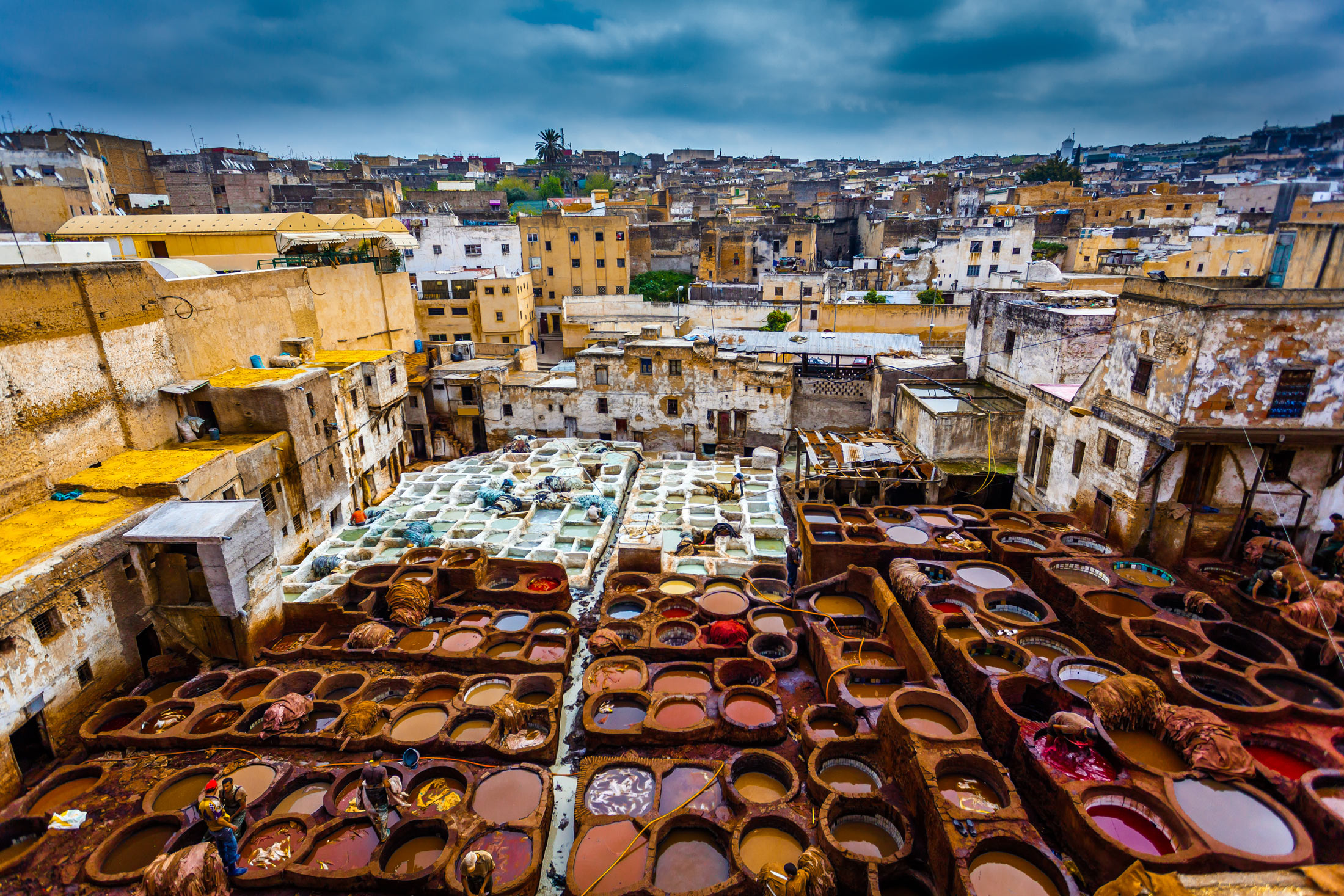
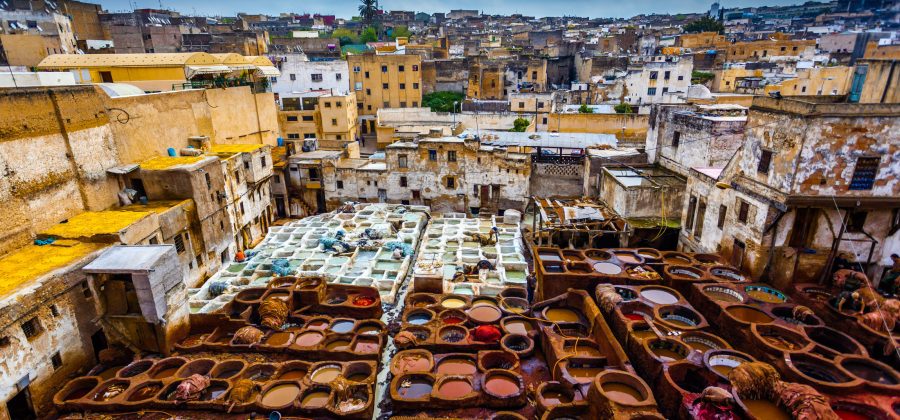
The largest of the city’s three traditional tanneries, Chouara is a honeycomb of stone vats filled with white, brown, yellow and red dyes, where workers still treat and colour hides by hand as they have for centuries. You watch from the terraces of the surrounding leather shops. Go in the morning, when the work is busiest, take the sprig of mint offered against the strong smell, and leave a small tip if you do not buy anything.
Nejjarine Square and Museum
A beautiful tiled fountain marks this small square in the carpenters’ souk. Beside it, the Funduq al-Nejjarine, a caravanserai built in 1711 where merchants once stayed with their goods, now houses the Museum of Wooden Arts and Crafts, with a rooftop café overlooking the medina.
Zaouia of Moulay Idriss II
The shrine of Idris II, regarded as the founder of the city, is one of the most sacred places in Morocco. Non-Muslims cannot enter, but the decorated doorway and the lanes around it, lined with stalls selling candles and nougat, are worth a look.
Place Seffarine
The ringing of hammers announces this small square, where coppersmiths beat out pots, trays and the huge cauldrons used at weddings, in the shade of a large tree beside the Qarawiyyin library.
Dar Batha Museum
Close to Bab Bou Jeloud, this 19th-century palace with an Andalusian-style garden has been restored and reopened as a museum of Islamic arts, with fine collections of ceramics, woodwork, carpets and embroidery.
Fes el-Jdid and the Mellah
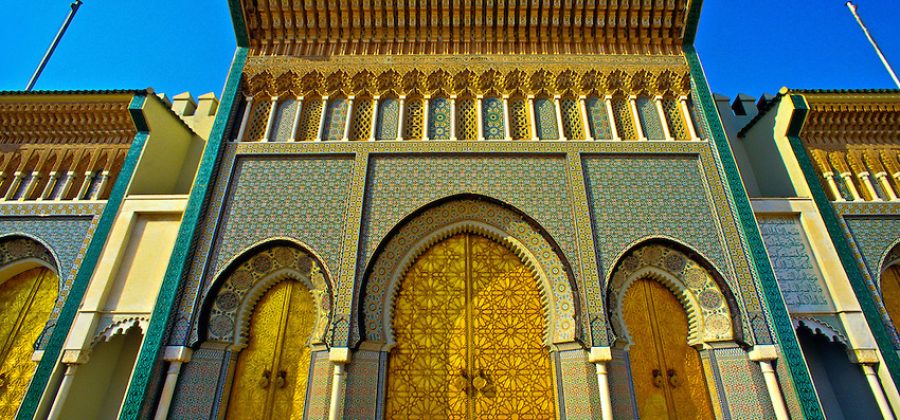
A short walk or taxi ride from Bab Bou Jeloud, the Marinid “New Fes” is home to the great brass doors of the Royal Palace (Dar el-Makhzen), which you can admire from the square outside, and to the Mellah, the historic Jewish quarter, with its balconied houses, Jewish cemetery and the 17th-century Ibn Danan Synagogue.
The Marinid Tombs and Borj Nord
For the classic view over the medina, take a taxi up to the ruined Marinid Tombs on the hill north of the city, ideally just before sunset, when the call to prayer rises from hundreds of mosques below. The nearby Borj Nord fortress offers a similar panorama.
Plan Your Visit to Fes
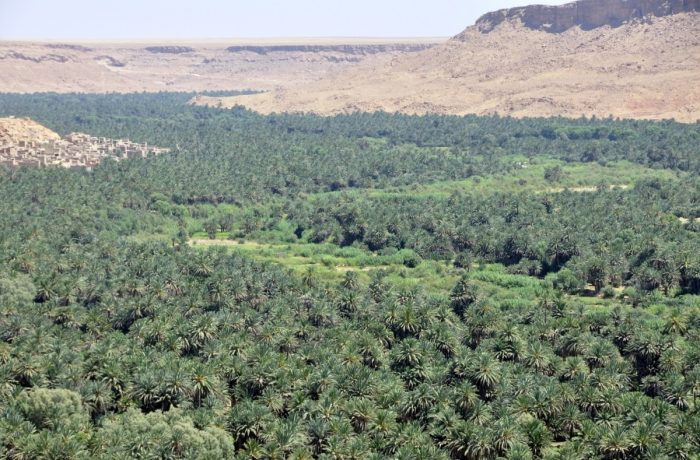
Ifrane, the Azrou cedar forest, the Ziz Valley palm grove and the Sahara, ending in Marrakech.
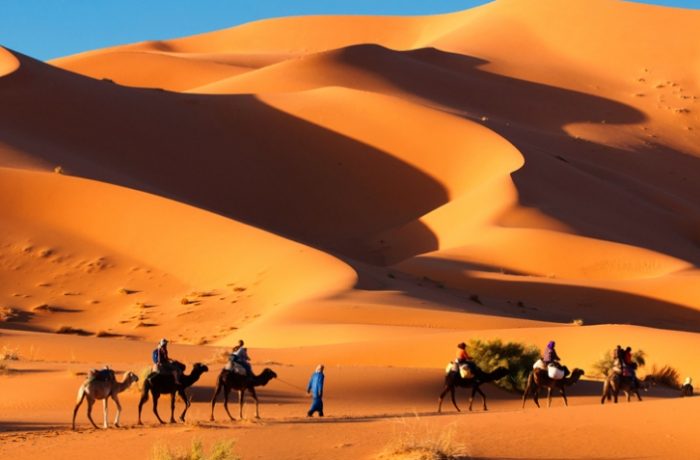
Ifrane, the Azrou cedar forest and the Ziz Valley, with time in the Sahara desert.
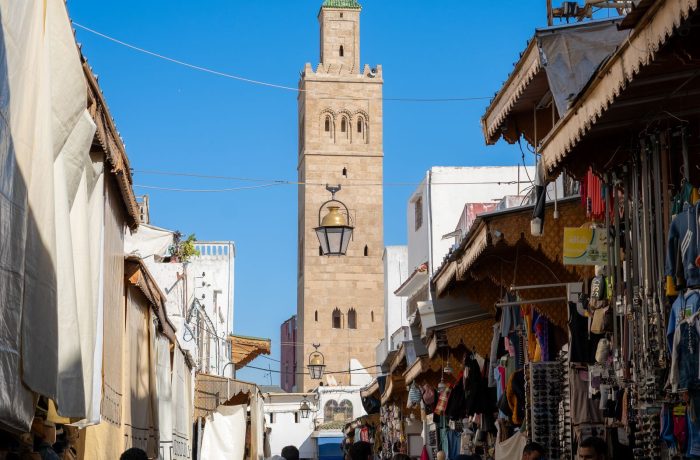
Our practical guide to Morocco’s other great medina: souks, palaces and tips for your visit.
Frequently Asked Questions
Is there an entrance fee for the Medina of Fes?
No. The medina is free to enter and explore at any time. Some monuments inside it, such as the Bou Inania and Al-Attarine madrasas, charge a small entrance fee.
How many days do I need for the Medina of Fes?
One full day covers the highlights, but two days let you explore at a relaxed pace and add Fes el-Jdid and the viewpoints above the city.
Do I need a guide to visit the Fes Medina?
It is not required, but the medina is a real labyrinth, so many travellers book a licensed guide for their first half day. Arrange one through your riad, hotel or tour operator rather than accepting offers in the street.
Can non-Muslims visit the Qarawiyyin Mosque?
Non-Muslims cannot enter the mosque, but you can look into its courtyard through the open doors. The Bou Inania and Al-Attarine madrasas are open to all visitors.
When is the best time to visit the Chouara Tannery?
In the morning, when the tanners are most active and the light is good. You watch from the terraces of the leather shops around the tannery.
Is the Medina of Fes safe?
Generally yes. Watch your belongings in crowded lanes and politely refuse unofficial guides. See our safety in Morocco guide.
What is the difference between Fes el-Bali and Fes el-Jdid?
Fes el-Bali is the original medina, founded at the end of the 8th century. Fes el-Jdid (“New Fes”) was built next to it by the Marinids in 1276 and includes the Royal Palace and the Mellah. Together they form the UNESCO-listed Medina of Fes.
Ready to Explore Fes?
Tell us your dates, and we will help you plan a private tour that includes Fes and the best of Morocco.
Email: travelstomorocco@gmail.com | Phone: +212 6 62 38 50 95
Ask for Prices
Please fill in the form below or contact us directly by email at travelstomorocco@gmail.com, and we will answer you as soon as possible.