



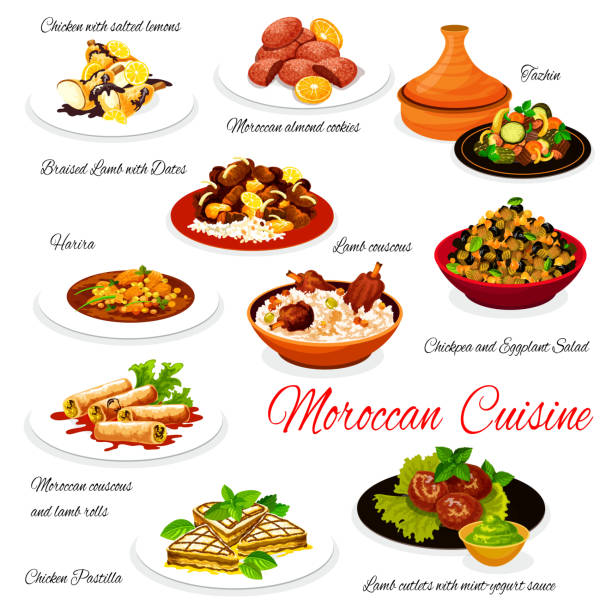
The Flavours of Morocco
Moroccan cuisine is one of the richest and most varied in the world. A table filled with tagines, salads, breads, fruit and sweets is a common sight, reflecting both the abundance of the country’s produce and the generosity of its people. The cuisine blends Amazigh (Berber), Arab, Moorish, Mediterranean and Sub-Saharan traditions, and the cooks of the imperial cities of Fes, Meknes, Marrakech and Rabat have refined it over the centuries.
Food is at the heart of Moroccan hospitality. Meals are shared from a central dish, spices perfume every market and mint tea is offered everywhere. This guide introduces the dishes, spices, drinks and sweets to look for, and how to eat like a local. Want to taste it on a trip? See our tours in Morocco.

Signature Moroccan Dishes
These are the dishes you will see on almost every menu and in almost every home.
Tagine
A slow-cooked stew named after the conical clay pot it is cooked in. Lamb, chicken or vegetables simmer with spices, preserved lemons, olives, prunes or almonds.
Couscous
Steamed semolina grains served with vegetables and meat. Couscous is the traditional Friday meal, when many families gather after midday prayers.
Pastilla
A delicate, flaky pastry pie filled with chicken or pigeon, almonds and spices, and dusted with cinnamon and sugar for a sweet and savoury taste.
Harira
A hearty soup of tomatoes, lentils and chickpeas, flavoured with herbs and spices. It is served all year and is the classic dish for breaking the fast in Ramadan.
Tanjia
A Marrakech speciality. Meat is slow-cooked with spices in a clay urn, traditionally in the embers of a hammam furnace, until it is meltingly tender.
Mechoui
Lamb roasted slowly until it falls off the bone, served at celebrations and often eaten with cumin and salt.
Also look for zaalouk (a warm aubergine and tomato salad), briouats (small filled pastries), kefta (spiced meatballs), mrouzia (lamb with honey, raisins and almonds), msemen (flaky flatbread) and fresh khobz bread. Chicken is the most widely eaten meat, followed by beef and lamb.
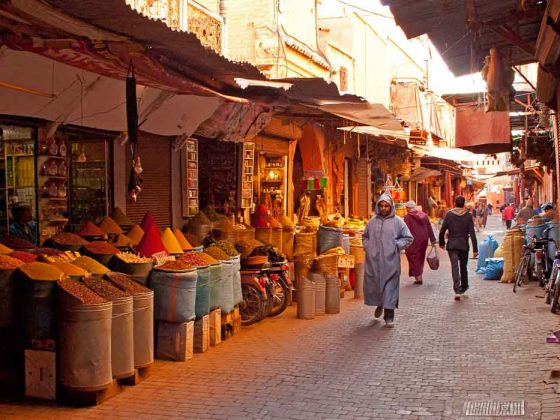
Spices and Ras el Hanout
Spices are the soul of Moroccan cooking. The souks of Marrakech and Fes sell them in cone-shaped piles, and every cook has a favourite blend. Ras el hanout, meaning “head of the shop”, is a mix of many spices used in tagines and couscous. Most Moroccan food is fragrant rather than hot, and harissa chilli paste is usually served on the side.
Common Spices and Herbs
- Cumin (kamoun)
- Cinnamon (karfa)
- Turmeric (kharkoum)
- Ginger (skinjbir)
- Paprika (tahmira)
- Saffron (zaafran)
- Coriander (kasbour) and parsley (maadnous)
- Mint (nana)
Drinks, Sweets and Pastries
Drinks
- Mint tea: green tea brewed with fresh mint and sugar, poured from a height into small glasses. It is the national drink and a sign of welcome.
- Fresh juices: orange juice is sold from carts in the squares, and juice bars make shakes with avocado, banana and almonds.
- Coffee: served strong, or with milk as a café au lait.
- Bottled water: recommended for visitors.
Sweets and Pastries
- Kaab el ghzal: crescent-shaped “gazelle horn” pastries filled with almond paste.
- Chebakia: fried sesame and honey cookies, especially popular in Ramadan.
- Sellou: a crumbly mix of toasted flour, almonds and sesame.
- Rozz bel hleeb: creamy rice pudding.
- Dates and fresh fruit: a simple, traditional way to end a meal.
Eating Like a Local
Eating in Morocco is a social experience, and a few customs will help you enjoy it.
- Share the dish. Food is often served on one large plate or in a tagine at the centre of the table, and everyone eats from their own side.
- Use your right hand and bread. Khobz bread is used to scoop up sauces and pick up food.
- Wash your hands. Hosts often bring a basin and water before and after the meal.
- Accept the tea. Mint tea is offered as a sign of welcome.
- Vegetarians eat well. Vegetable tagines and couscous with seasonal vegetables are on most menus, so mention any dietary needs when you order.
- Most food is halal. Alcohol is served only in licensed hotels, restaurants and bars.
Breakfast in Morocco
A typical breakfast includes msemen or baghrir (small spongy pancakes) with honey or butter, bread with olive oil and olives, eggs, and plenty of mint tea or coffee. Look out for street sellers of warm sfenj, a ring-shaped doughnut.
Where to Eat in Morocco
The best Moroccan food is often cooked at home, so look for small local restaurants, family-run guesthouses and riads that serve home-cooked dinners.
Marrakech
Try tanjia and grilled meats, and visit the food stalls of Jemaa El Fna square, which fill the square with smoke and aromas every evening. Add a stay with our day trips from Marrakech.
Fes
Known for its refined cooking, including pastilla and rich tagines with prunes and almonds. Explore the medina on our 4-day tour from Fes to Marrakech.
Essaouira
Choose fresh grilled fish and seafood at the port. It is an easy trip on our Marrakech to Essaouira day trip.
Merzouga and the Sahara
Enjoy a traditional dinner at a desert camp under the stars, and look for Berber “pizza” baked in the sand. See our 3-day Marrakech to Sahara tour.
Chefchaouen
The blue city of the Rif is known for its fresh goat cheese and hearty mountain cooking. Read our guide to the best destinations in Morocco.
Riads and Guesthouses
Many riads serve dinner in the courtyard or on the roof terrace. See our page on accommodation in Morocco.
Frequently Asked Questions
What is the national dish of Morocco?
Couscous and tagine are the two dishes most closely linked with Morocco. Couscous is the traditional Friday meal, while tagine is served all week in homes and restaurants.
Is Moroccan food spicy?
Moroccan food is rich in aromatic spices such as cumin, cinnamon, ginger and saffron, but it is usually not hot. Harissa chilli paste is normally served on the side, so you can add heat to taste.
What do Moroccans eat for breakfast?
Common breakfast foods are msemen and baghrir pancakes with honey or butter, bread with olive oil and olives, eggs, and mint tea or coffee.
Can vegetarians eat well in Morocco?
Yes. Vegetable tagines, couscous with seasonal vegetables, salads such as zaalouk, harira soup and fresh fruit are widely available. Mention your dietary needs when you order, as many dishes are cooked with meat stock.
Is it safe to eat street food?
Street food is a highlight, especially in the evening in places like Jemaa El Fna. Choose busy stalls where food is cooked fresh in front of you, and drink bottled water.
Are meals included in your tours?
Each tour page lists which meals are included. On our New Year’s Eve tour, for example, breakfast and dinner are included and lunch is not. See our New Year’s Eve tour or contact us to confirm the meals on your itinerary.
Keep Exploring
More Morocco travel guides:
Taste Morocco for Yourself
Tell us your dates and interests, and we will design a private tour that includes the flavours you want to try.
Email: travelstomorocco@gmail.com | Phone: +212 6 62 38 50 95