

Faith and Everyday Life in Morocco
Religion in Morocco is a central part of national identity and daily life. Islam is the state religion, and most Moroccans are Sunni Muslims who follow the Maliki school of Islamic law. At the same time, Morocco has a long history of coexistence, with Jewish and Christian communities and a constitution that guarantees freedom of worship. Understanding the role of faith helps visitors appreciate the rhythm of the day, the architecture of the mosques and the meaning of holidays such as Ramadan and Eid.
This guide explains the basics of Islam in Morocco, the main religious celebrations, the country’s most important mosques and religious sites, and how to behave respectfully as a visitor. See also our guide to the culture of Morocco.
Islam in Morocco
Sunni Islam of the Maliki rite is the dominant tradition in Morocco. Sufi brotherhoods and the shrines of local saints, called zawiyas, also play an important role in popular religious life, and many towns hold annual festivals called moussems in honour of a saint.
The ruling Alaouite dynasty has reigned since the 17th century. The king is the Commander of the Faithful (Amir al-Mu’minin) and is regarded as a descendant of the family of the Prophet Muhammad, which gives the monarchy a strong religious dimension. The constitution describes Islam as the religion of the state and guarantees freedom of worship.
The Five Pillars of Islam
- Shahada: the declaration of faith.
- Salat: prayer five times a day.
- Zakat: giving to those in need.
- Sawm: fasting during Ramadan.
- Hajj: pilgrimage to Mecca, at least once in a lifetime for those who are able.
Prayer and Daily Life
The call to prayer (adhan) rings out from the minarets five times a day, at dawn, midday, mid-afternoon, sunset and night. You will hear it in every town and village, and it is one of the most memorable sounds of a trip to Morocco. Moroccan mosques are easy to recognise by their tall, square minarets and green-tiled roofs.
Friday is the day of the main congregational prayer at midday. Some shops close for a few hours, and many families share a couscous meal afterwards. Faith also shapes everyday phrases, from inshallah (God willing) to bismillah (in the name of God) said before a meal, and hospitality toward guests is considered a religious duty.
Ramadan and Religious Celebrations
The Islamic calendar follows the moon, so these celebrations move about ten days earlier each year. Check the current dates before you plan your trip.
Ramadan
The month of fasting from dawn to sunset. Families gather after sunset to break the fast with dates, milk and harira soup, and the evenings are lively. Opening hours can change during the day. Read about travelling during Ramadan.
Eid al-Fitr
The festival that marks the end of Ramadan, celebrated with family visits, new clothes, prayers and sweets such as chebakia.
Eid al-Adha
The feast of sacrifice, when families gather for prayers and shared meals. It is one of the biggest holidays of the year, and many shops and services close for a few days.
Mawlid
The birthday of the Prophet Muhammad, marked with special foods, religious gatherings and sometimes processions.
Mosques and Religious Sites to Know
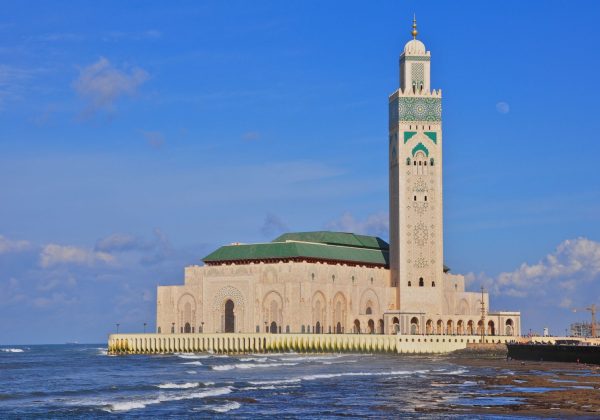
The Hassan II Mosque in Casablanca is one of the largest mosques in the world. Built on the edge of the Atlantic Ocean and completed in 1993, it has one of the tallest minarets in the world and space for tens of thousands of worshippers. It is one of the few mosques in Morocco that non-Muslims can enter on a guided visit, and you can visit it on our imperial cities tour and our New Year’s Eve tour. Check current visiting hours before you go.
Koutoubia Mosque, Marrakech
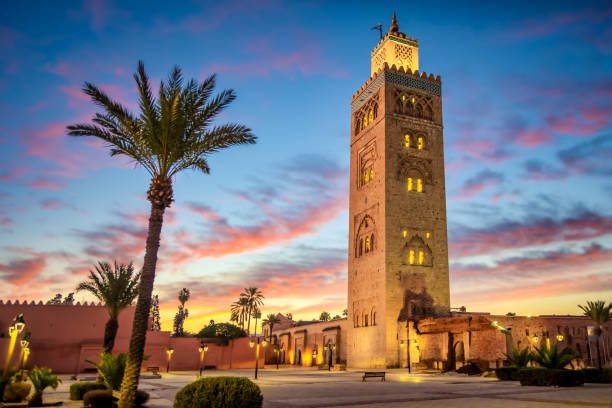
The 12th-century Koutoubia and its 77-metre minaret are the symbol of Marrakech. The mosque is closed to non-Muslims, but the minaret and gardens can be admired from outside.
Al Quaraouiyine, Fes
Founded in 859 by Fatima al-Fihri, this mosque and university in the Fes medina is considered the oldest continuously operating university in the world. It is closed to non-Muslims, but you can see its doors from the lanes outside.
Ben Youssef Madrasa, Marrakech
A former Islamic college with a courtyard of carved cedar, plaster and zellige tilework, now open to visitors.
Bou Inania Madrasa, Fes
A 14th-century theological school with beautiful tilework and carved wood, open to visitors. See it on our 4-day tour from Fes to Marrakech.
Jewish and Christian Heritage
Jewish communities lived in Morocco for centuries, and their heritage is part of the country’s identity. Many cities have a mellah, the historic Jewish quarter. The mellah of Fes is one of the oldest, and the mellahs of Marrakech and Essaouira also have synagogues and cemeteries that visitors can see. The Museum of Moroccan Judaism in Casablanca tells the story of the community.
Small Christian communities also live in Morocco, mainly in the larger cities, where you will find churches from the French and Spanish periods. Morocco’s tradition of hospitality to visitors of all faiths is one of its strengths.
Respectful Travel: Etiquette for Visitors
At Mosques and Religious Sites
- Most mosques are closed to non-Muslims, so respect any signs and do not try to enter.
- Dress modestly, with shoulders and knees covered. See what to wear as a female tourist.
- Do not photograph people who are praying.
- Keep your voice down near mosques at prayer time.
During Ramadan and Holidays
- You are not expected to fast, but avoid eating, drinking or smoking in public during the day.
- Expect shorter opening hours and busier roads just before sunset.
- Book transport and hotels early around Eid, when many Moroccans travel.
- Wish people Ramadan Kareem or Eid Mubarak. It is always appreciated.
Frequently Asked Questions
Is Morocco a Muslim country?
Yes. Islam is the state religion, and most Moroccans are Sunni Muslims. There are also small Jewish and Christian communities, and the constitution guarantees freedom of worship.
Are tourists expected to follow Islamic rules?
Visitors are not expected to follow religious rules, but respect for local customs is appreciated. Dress modestly, be discreet in public, and avoid eating or drinking in public during the day in Ramadan.
Can non-Muslims visit mosques in Morocco?
Most mosques are closed to non-Muslims. The Hassan II Mosque in Casablanca offers guided visits, and some historic madrasas, such as the Ben Youssef in Marrakech and the Bou Inania in Fes, are open to visitors.
What is the call to prayer?
The adhan is the call to prayer, announced from the minaret five times a day. It is a normal part of daily life and a memorable sound for visitors.
Can I travel to Morocco during Ramadan?
Yes. Hotels, tours and attractions continue to operate, though some restaurants close during the day. The evenings are lively. Tell us your dates and we will plan around them.
What should I wear when visiting religious sites?
Cover your shoulders and knees, and wear loose, comfortable clothing. Women may want to carry a light scarf. See our advice on what to wear in Morocco.
Discover Morocco Respectfully
Tell us your dates and interests, and we will design a private tour that lets you experience Morocco’s heritage with the right context.
Email: travelstomorocco@gmail.com | Phone: +212 6 62 38 50 95