

Safety in Morocco: A Complete Guide for Travellers
Practical tips, emergency numbers, and advice for women and families
- Home
- Safety in Morocco
Is Morocco Safe to Visit?
Morocco welcomes more than 17 million visitors a year, and for the vast majority the trip is trouble-free. As with any destination, a little preparation goes a long way. This guide to safety in Morocco covers practical tips, whether Morocco is safe for solo women and families, emergency numbers, and how to avoid the most common scams, so you can focus on enjoying the medinas, mountains and desert.
Planning your trip? See our private tours in Morocco or read our Morocco travel FAQ.
Quick Answer
- Overall: Morocco is generally safe for tourists, including solo women and families, when you take normal precautions.
- Biggest risks: pickpocketing in crowded souks, and persistent unofficial guides or scams, not violent crime.
- Emergency numbers: Police 19, Ambulance/Fire 15, or 112 from any mobile.
- Before you go: check your government’s travel advisory and buy travel insurance.
General Safety Tips
Staying safe here mostly comes down to common sense: the same rules that apply in any busy destination apply too.
Stay Informed for Your Safety
Check your government’s travel advisory before you go and register your trip if your country offers that service. Conditions can vary by region, so check the latest advice for the areas you plan to visit.
Be Cautious in Crowded Areas
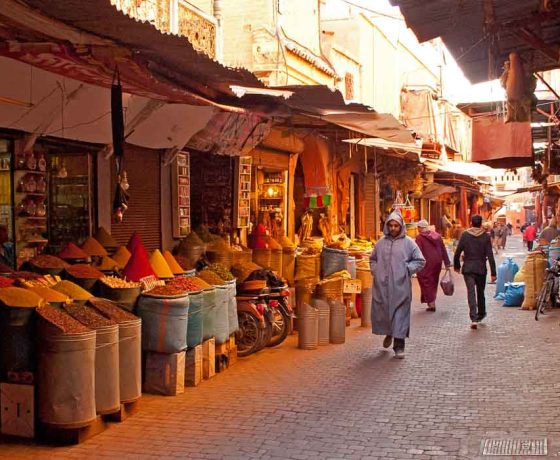
Tourist spots and busy souks can attract pickpockets. Keep bags zipped and in front of you, avoid flashing cash or jewellery, and stay alert in crowded medinas, bus stations and markets.
Use Safe, Reputable Transport
Use registered taxis, ideally with a working meter, or agree the fare before you set off. Book tours and transfers through reputable companies rather than unsolicited offers on the street.
Respect Local Customs to Travel Safely
Dress modestly, especially outside the main tourist areas and at religious sites, and be discreet during Ramadan. Understanding and following local customs is one of the simplest ways to travel comfortably and avoid unwanted attention.
Stay Hydrated and Healthy
Drink bottled water and be cautious with street food from stalls that look less busy or hygienic. Popular, high-turnover stalls are usually a safer bet than quiet ones.
Get Travel Insurance
Buy travel insurance that covers medical care, theft and cancellation. It is inexpensive compared with the cost of a medical emergency or a cancelled trip.
Is Morocco Safe for Women and Solo Travellers?
Many women travel around Morocco alone or in small groups and have a wonderful time. You may get more attention in busy areas, especially in medinas and around tourist sites, but this is rarely dangerous. A confident, direct manner and a firm “no, thank you” usually end unwanted attention quickly.
Dressing modestly (covering shoulders and knees) helps you feel more comfortable and attracts less unwanted attention, particularly outside beach resorts and away from the biggest cities. Riads and hotels are used to solo female guests, and many can arrange a driver-guide if you would prefer not to navigate on your own.
See our women’s tour in Morocco if you would like a private, women-friendly itinerary.
Is Morocco Safe for Families?
Yes. Morocco is a family-friendly destination, and Moroccan culture is warm toward children. Riads and hotels are generally very accommodating, and family-friendly activities such as camel rides, beach time in Essaouira or Agadir, and the Ouzoud Waterfalls are popular with children of all ages.
A few practical points: pavements and traffic in the medinas can be uneven and busy, so keep a close eye on young children, use sun protection and check vaccination advice with your doctor well before you travel. See our Morocco family tour for an itinerary designed around families.
Common Scams and How to Stay Safe
- Unofficial guides: people who offer unsolicited directions or tours, then ask for payment. A polite “la, shukran” (no, thank you) is usually enough. Book guides through a reputable company.
- “That road is closed”: a stranger tells you your route is closed and offers to guide you “somewhere better”, usually a shop that pays them commission. Politely decline and keep walking.
- Henna tattoos: a price is agreed verbally, then a much higher price is demanded afterwards. Confirm the price clearly before anyone touches you.
- Fake police or officials: ask to see identification, and if in doubt, walk to the nearest official police station rather than dealing with someone on the street.
- Overcharging in taxis: agree the fare, or insist on the meter, before you get in.
Emergency Numbers in Morocco
Save these numbers in your phone before you travel. Operators may speak French or Arabic more readily than English, so state your location clearly and mention that you are a tourist.
| Police (cities) | 19 |
| Royal Gendarmerie (rural areas, highways) | 177 |
| Ambulance and fire brigade | 15 |
| Universal emergency number (mobile phones) | 112 |
Also keep your country’s embassy or consulate number and your travel insurance emergency line to hand, especially if you lose your passport or need urgent medical care.
Frequently Asked Questions
Is Morocco safe to travel to right now?
Yes, Morocco is generally considered safe for tourists. As with any destination, check your government’s current travel advisory before you go, since specific regions or situations can change.
Is Morocco safe for women travelling alone?
Many women travel Morocco solo or in small groups without problems. You may get extra attention in busy areas, but serious incidents are rare. Dress modestly, stay confident, and see our advice on what to wear in Morocco as a female tourist.
Is Morocco safe for families with children?
Yes. Morocco is welcoming toward children, and riads and hotels are generally family-friendly. Keep an eye on uneven medina pavements and traffic, and check vaccination advice with your doctor beforehand.
What is the emergency number in Morocco?
Dial 19 for police in cities, 177 for the Royal Gendarmerie outside cities, or 15 for ambulance and fire services. From a mobile phone, 112 also connects you to emergency services.
Is tap water safe to drink in Morocco?
We recommend bottled water for visitors. It is inexpensive and widely available.
What is the most common scam in Morocco?
Unsolicited “guides” who offer directions or help and then ask for payment are the most common. A polite decline is usually enough. See our tips above on avoiding common scams.
Do I need travel insurance for Morocco?
It is not legally required, but strongly recommended. Choose a policy that covers medical treatment, theft and trip cancellation.
Can you help me plan a safe, private trip to Morocco?
Yes. All our tours are private, with a driver-guide throughout. Tell us your plans on our contact page and we will help.
Plan Your Trip
Helpful pages before you book:
Travel Morocco with Confidence
We take your safety seriously: every one of our tours is private, with a trusted driver-guide by your side, so you can relax and enjoy the journey.
Email: travelstomorocco@gmail.com | Phone: +212 6 62 38 50 95
Ask for Prices
Please fill in the form below or contact us directly by email at travelstomorocco@gmail.com, and we will answer you as soon as possible.