

Discover the Kingdom of Morocco
This Morocco overview gives you the essentials before you travel. Morocco is a country of contrasts: snow-capped mountains and Saharan dunes, ancient medinas and modern cities, Atlantic beaches and green valleys, all within a few hours of each other. The scent of spices, the colour of the souks, the sound of music in the squares and the sense of history in every street make it one of the most fascinating destinations in the world.
Below you will find key facts, geography, climate, people and practical information, with links to our detailed guides and tours. When you are ready to see it for yourself, explore our tours in Morocco.

Morocco Key Facts
Official Name
Kingdom of Morocco
Capital
Rabat
Largest City
Casablanca
Area
About 446,550 square kilometres
Population
Roughly 37 million people
Government
Constitutional monarchy
Languages
Arabic and Amazigh (Tamazight) are official, and French is widely used
Religion
Islam
Currency
Moroccan dirham (MAD)
Geography and Regions
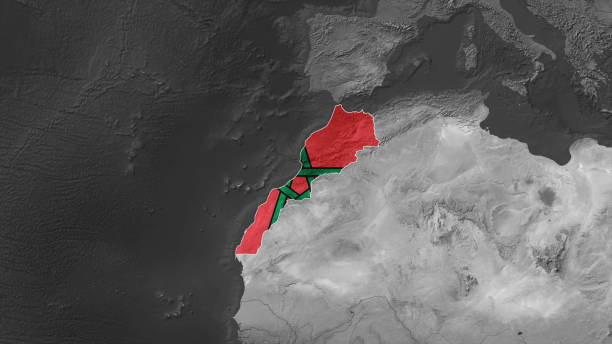
Morocco lies in the north-west of Africa, with the Atlantic Ocean to the west and the Mediterranean Sea to the north, and Algeria to the east. Rabat is the capital, while Casablanca is the largest city. From the coast to the desert, the country divides into several very different regions. Explore them in our guide to the best destinations in Morocco.
The Coasts
The Atlantic and Mediterranean coasts stretch for more than 3,000 kilometres, from Tangier and Rabat to Essaouira and Agadir.
The Atlas Mountains
The Middle, High and Anti-Atlas cross the country. Toubkal, at 4,167 metres, is the highest peak in North Africa.
The Rif Mountains
In the north, the Rif rises behind the Mediterranean coast and is home to the blue city of Chefchaouen.
The Imperial Cities
Fes, Meknes, Marrakech and Rabat, the historic capitals, are full of medinas, palaces and monuments.
Valleys and Oases
South of the High Atlas, the Draa, Dades and Todra valleys are lined with palm groves and kasbahs, around Ouarzazate and Ait Ben Haddou.
The Sahara
The desert covers the south-east, with the dunes of Erg Chebbi near Merzouga and Erg Chigaga near M’Hamid.
Climate and the Best Time to Visit
Morocco’s climate changes from region to region. The north and the Atlantic coast are mild, with warm, dry summers and cooler, wetter winters. Inland cities such as Marrakech are hotter in summer and cool at night in winter. The Atlas Mountains have cold winters with snow, and the south is hot and dry, with very hot days in the Sahara in summer and cold nights in winter.
For most tours, spring and autumn are the most comfortable seasons. Read our answers on weather and the best time to visit or see our New Year’s Eve in the Sahara tour.
Seasons at a Glance
- Spring (March to May): warm days, green landscapes and ideal touring weather.
- Summer (June to August): hot inland and in the desert, cooler on the coast and in the mountains.
- Autumn (September to November): comfortable temperatures and another ideal season.
- Winter (December to February): mild in the cities, snow in the Atlas and cold desert nights.
People, Languages and Religion
People and Languages
Moroccans are Arab, Amazigh (Berber) or of mixed descent, and the Sahrawi communities live in the south. Arabic and Amazigh (Tamazight) are the official languages, Moroccan Arabic (Darija) is the language of daily life, and French is widely used in business and education. Spanish is understood in the north, and English is common in tourist areas.
Learn more in our guide to the culture of Morocco.
Religion
Islam is the state religion, and most Moroccans are Sunni Muslims. There are also small Christian and Jewish communities. Religion shapes daily life, from the call to prayer to the holidays of Ramadan and Eid.
Read more about religion in Morocco and our tips for respectful travel.
Practical Basics
- Currency: Moroccan dirham (MAD). ATMs are common in cities.
- Time zone: GMT+1, moving back one hour during Ramadan.
- Electricity: 220 V, 50 Hz, with European two-pin plugs.
- Driving: on the right-hand side of the road.
- Calling code: +212.
- Drinking water: bottled water is recommended for visitors.
Planning Your Trip
Morocco is easy to reach and easy to travel, with direct flights from many European cities, regular ferries from Spain and a good network of trains, buses and roads. See our guide to getting to Morocco for flights, ferries and airports, and our page on accommodation in Morocco for riads, hotels and desert camps.
Not sure where to start? Our team can plan a private tour around your dates, interests and budget. Have a question first? Check our Morocco FAQ.
Explore Morocco with Us
See the highlights of Morocco on a private tour designed around you.
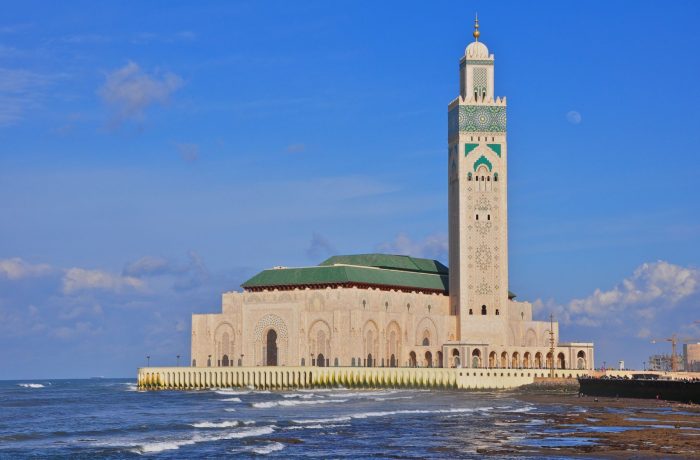
A snapshot of Morocco’s historic cities: Casablanca, Fes, Rabat, Meknes and Marrakech.
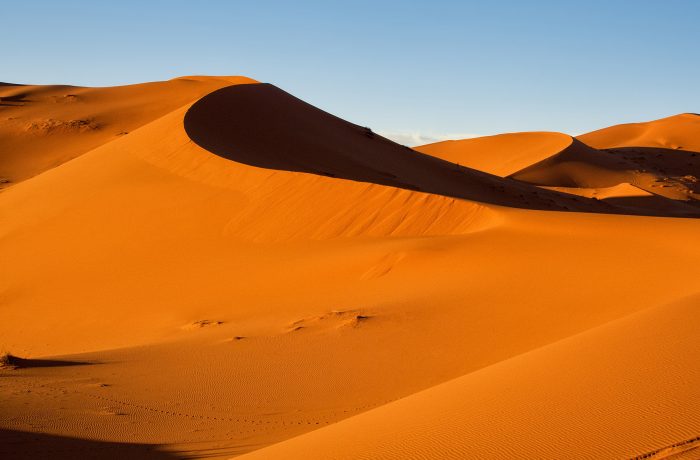
Ifrane, the cedar forest, the Ziz Valley and a camel trek in the Sahara.
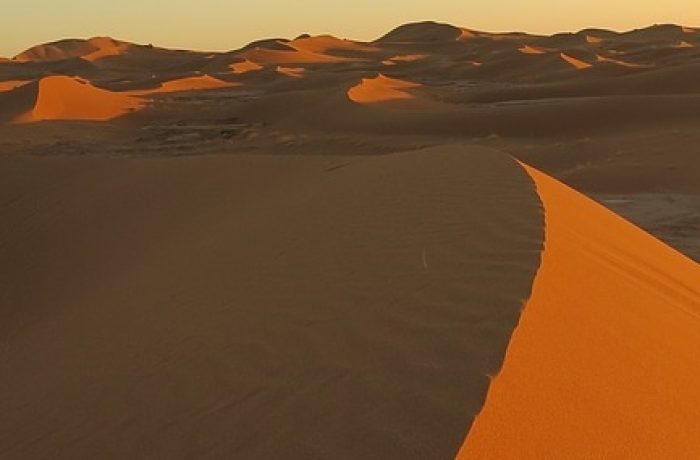
Cross the High Atlas, visit Ait Ben Haddou and Ouarzazate, then take a camel ride in the desert.
Frequently Asked Questions
Where is Morocco?
Morocco is in the north-west of Africa, with the Atlantic Ocean to the west and the Mediterranean Sea to the north. Algeria lies to the east, and the Sahara Desert covers much of the south. Spain is only about 14 kilometres away across the Strait of Gibraltar.
What is the capital of Morocco?
The capital is Rabat, on the Atlantic coast. Casablanca is the largest city, and Marrakech and Fes are the most famous cities for visitors.
What languages are spoken in Morocco?
Arabic and Amazigh (Tamazight) are the official languages. Moroccan Arabic (Darija) is the language of daily life, and French is widely used. See our guide to the culture of Morocco.
What is the currency in Morocco?
The Moroccan dirham (MAD). ATMs are common in cities, and cash is useful in the souks and small towns.
What is Morocco famous for?
Morocco is famous for its imperial cities and medinas, the Sahara Desert, the Atlas Mountains, kasbahs such as Ait Ben Haddou, colourful souks, tagine and couscous, mint tea and its handicrafts.
When is the best time to visit Morocco?
Spring and autumn are ideal for most tours. Summers are very hot inland and in the desert, and winter nights are cold in the mountains and the Sahara. See our Morocco FAQ for more.
Keep Exploring
More Morocco travel guides:
Ready to Discover Morocco?
Tell us your dates and interests, and we will design a private tour around them.
Email: travelstomorocco@gmail.com | Phone: +212 6 62 38 50 95